And Now For Something Completely Different
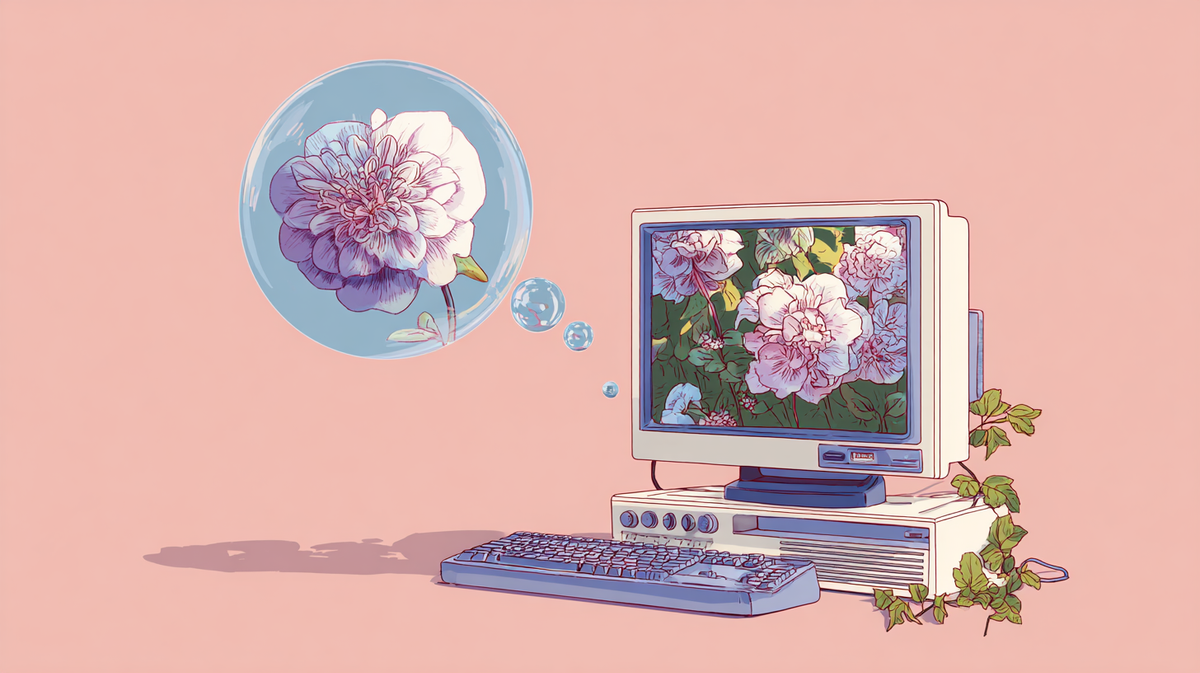
I show someone a picture of a flower on my phone. They ooh and aah, and then, “Is that a real flower?” they ask.
“No,” I say. “It’s a photograph.” Snort. "Come on. I mean, is it AI, or is it real?"
And my brain locks up, as it does. Because what exactly are we asking at that point?
Was the flower real? Or was the photo real? Was the image “fake” because photons bounced off a sensor instead of pigments onto film? If an AI generates a flower that never existed, is that fundamentally stranger than Monet painting lilies that also never existed in exactly that form?
We're all suddenly amateur philosophers, and honestly this easily brushes right up against Empiricism — the idea that knowledge comes primarily through sensory experience. Think John Locke, George Berkeley, David Hume. Berkeley would have had a field day with AI images because he basically argued that existence itself is bound up with perception.
“Is the flower real if no human eye ever saw it?” Stick a webcam in the garden, and ask me again.
This fascinates me, I gotta say. Our brains react emotionally to an image because our perceptual system evolved to interpret patterns, not provenance.
I know this is murky territory for a blog post, but I have a lot of time on my hands. I was eventually bound to start thinking about the nature of reality.
Because we don't actually experience “reality,” right? We experience processed sensory interpretations assembled by the brain. Color itself is partly a construction; so is continuity. Our brains edit blind spots in our vision constantly. Memory rewrites itself every time it’s recalled. Duh, sure. Simple. We know this, even if we don't dwell.
The implications for today, though, are interesting to me. In a very real sense, the brain is already a generative model.
I use Midjourney, an AI image generator, a lot. My "art," if you want to call my interest/hobby that, is animating still images; I just like making things move. I used to animate from stock photos, but now I just tell Midjourney what I want exactly, and usually I get something I can work with, something indistinguishable from those stock photos. A coffee pot is a coffee pot is a coffee pot.
That’s why AI imagery feels philosophically destabilizing. It collides with assumptions most of us never realized we had: that seeing implies existence, that photographs are evidence, that perception equals truth. Or, in fact, that realism requires a physical referent. Is that flower real? becomes an oddly modern question.
But photographs were never reality. They were always frozen interpretations of reality. Since the beginnings of photography, humans have had trouble with this idea. Yes, the photo is real; we can hold it, touch it, tear it up. Alter it beyond recognition. What can we do to the flower, even if it was once "real," that would change anything?
An AI image is something stranger – a statistically plausible hallucination assembled from human visual culture. Which honestly sounds less like computer science and more like dreams. Ta-da.
The funny thing is that humans have always lived inside representations of reality rather than reality itself. Paintings. Stories. Maps. Theater. Photography. Radio dramas. Film. Television. Memory itself.
A photograph feels “real” to us because we grew up with photography. But photographs are wildly manipulative little things. Cropping changes meaning, color grading changes mood. Shutter speeds and lens apertures can turn water into silk and cities into ghost trails. Nobody ever accused Ansel Adams of “just documenting reality.”
And then AI arrived and kicked over the table. Now we can type: “Elderly astronaut sitting in a diner at 3am, cinematic lighting, melancholy mood”…and a machine produces something astonishing in seconds.
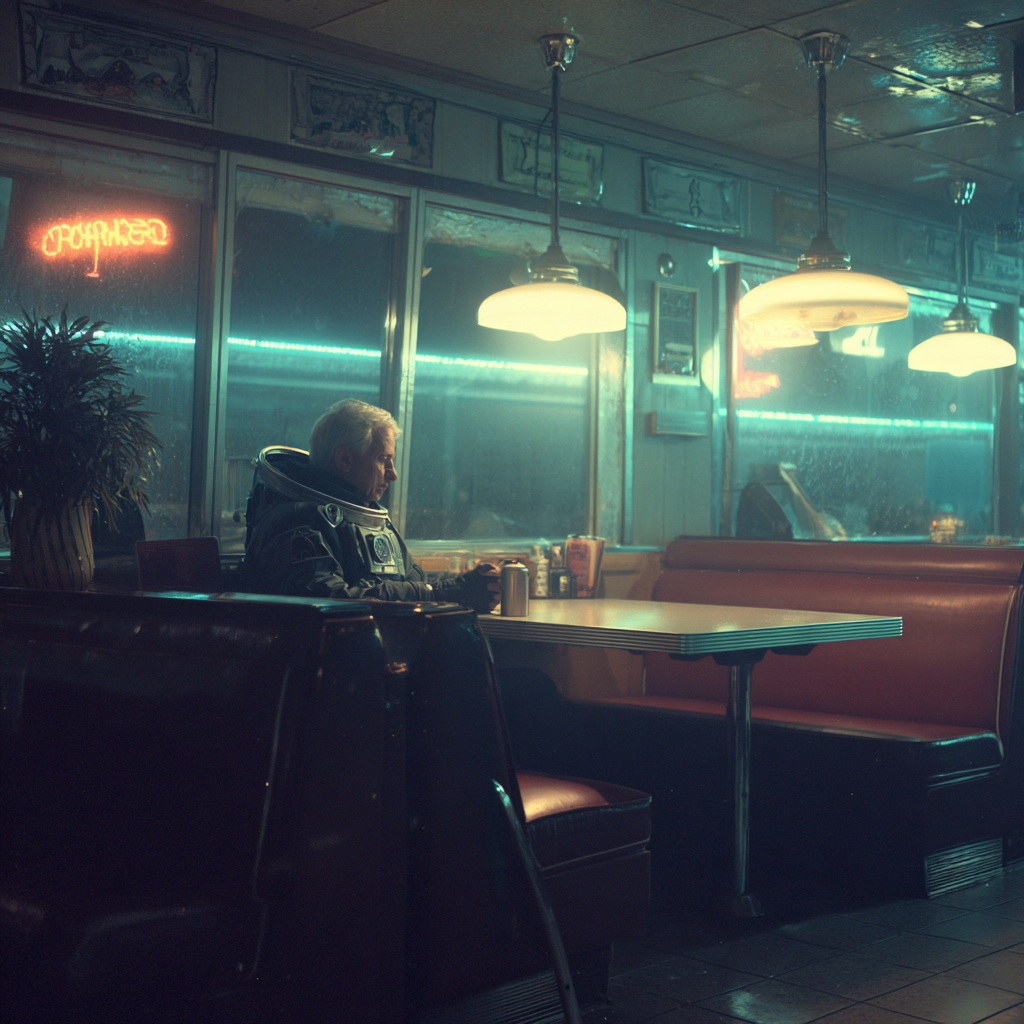
People often talk about this as if the AI is “imagining” something. I don’t think that’s quite right.
What these systems really do is more like compressed association. They have absorbed unimaginable amounts of human-created work — photographs, paintings, writing, cinematography, design language, patterns of speech — and they predict what tends to belong together. In a strange sense, AI image generators aren't alien at all. They feel intensely human. Not because they are human, but because they are made almost entirely out of us – our aesthetics, metaphors, habits, clichés, dreams. Our obsession with symmetry and beautiful faces and sunsets and dramatic clouds. And cats.
I've been saying for years that we need to think hard about semantics going forward. On social, "AI" is tossed around so much it becomes meaningless. I always translate "AI" into "computers" – try this at home! I don't trust computers, computers lie, computers make fake stuff, computers computers computers. See how stupid?
It's because you don't understand what's happening, I get it. If it's not part of your everyday life, you probably just deal with the annoying AI summaries of search results, the slop your friends and family spread around, the obvious machine-written clickbait. I understand wanting to back up or hold off, or deny inevitability.
None of this is inevitable, that's the problem. It's here. What was inevitable was that eventually computing was going to get so fast and so big that it could understand what we were asking it. And once that happened, it could give us what we wanted.
Sometimes that's going to be Star Wars fan art. I know, I know. We can't even stop people from breaking the law; they're never going to stop making Donald Trump have muscles. Slop and slop generators will always be with us. Artless people will never make art. GIGO remains a truth.
What fascinates me most isn’t whether AI images are “real.” It’s that AI is exposing how slippery reality already was. Words printed on paper can change our lives. We weep over fictional people at the movies. Every time we access a memory, we rewrite it. Now machines can generate convincing artifacts of experiences no one actually had; that’s unsettling. But it’s also kind of miraculous, and honestly – Did NO ONE watch Star Trek? This shouldn't have been surprising.😂
I think many people imagine AI users as lazy button-pushers trying to avoid creativity. But most of the people I know using these tools seriously are doing the opposite. They’re experimenting. Playing. Storyboarding ideas. Exploring visual language. Making things they could never physically produce alone.
Look, I'm invested in this. I've been sick and alone for nearly four years, and AI in its many, MANY forms has jumpstarted my creativity. I've learned to draw from making AI images. I've learned to code better by following ChatGPT instructions. I've asked a million questions and received a million answers. I honestly don't know what else we want.
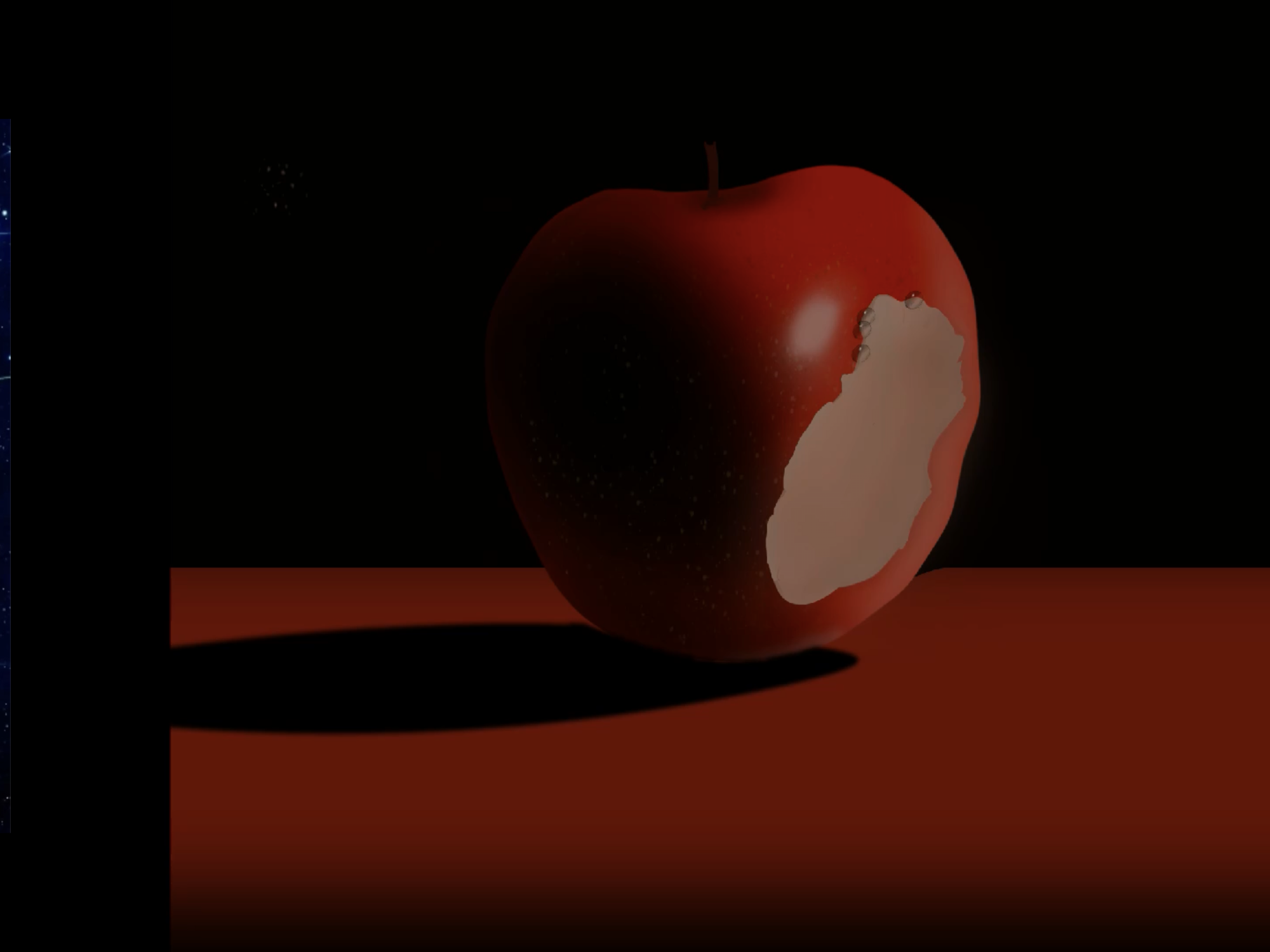
AI is scary even if you know a lot about the technology. And we're all going to learn hard lessons about reality until we develop thicker skin and just some understanding of what's happening here. Not the comic strip, black-and-white-hats, jerking-our-knees-until-they-hit-the-table kind of understanding. An actual, clear-eyed understanding of what this technology can do, and what it can't, and what it shouldn't.
The tools are real. The curiosity is real. The human response is real.
And maybe that matters more than whether the flower ever existed.